
Still Searching for a Therapist? Why It's So Hard and What Helps
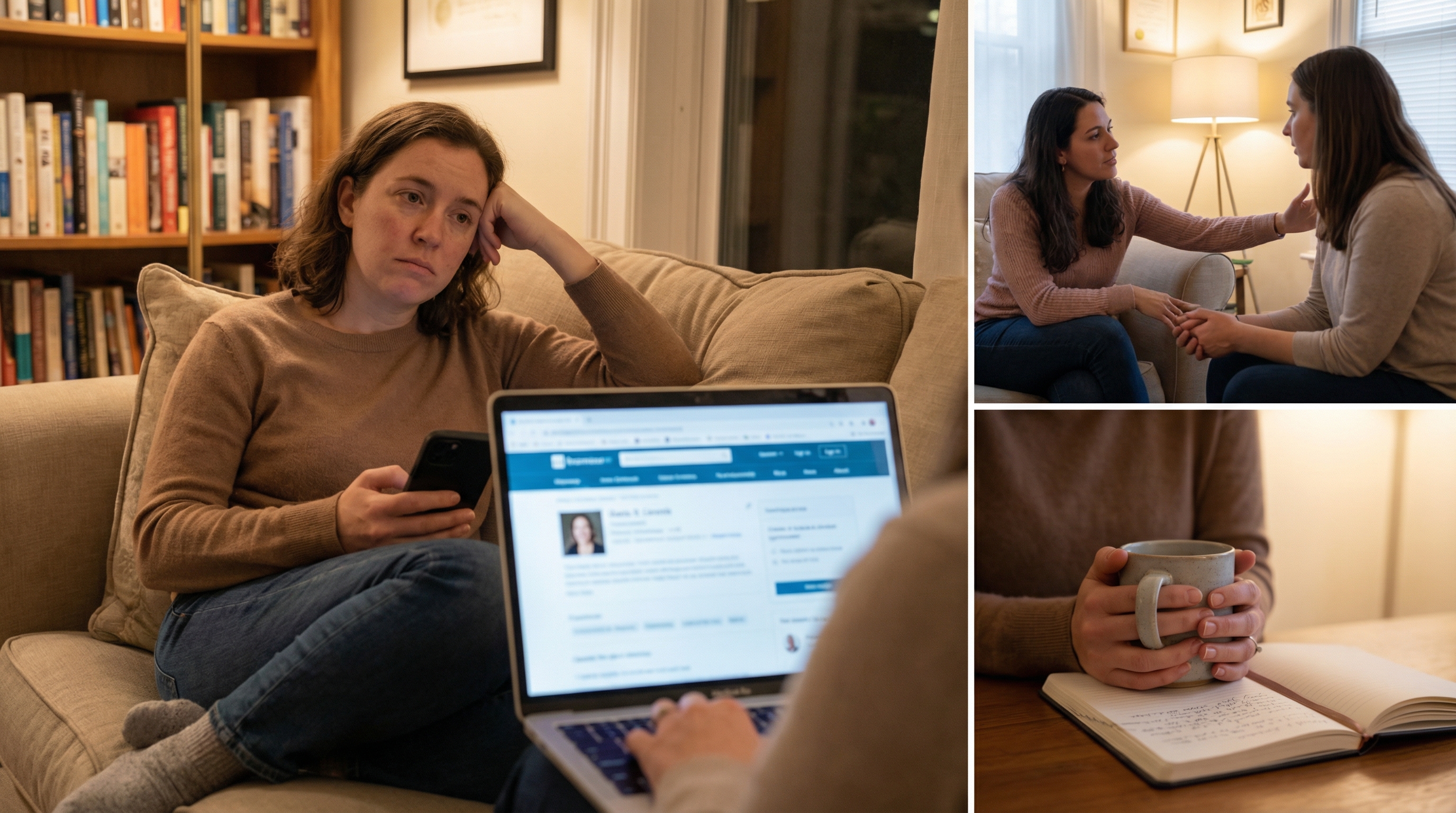
The therapist search is wearing people out.
You set aside an evening to find help. Three hours later you have twenty browser tabs open, every profile sounds alike, and you feel worse than when you began. It can seem as if the right person is out there but hidden behind a wall of near-identical listings.
That frustration is not a personal failing. The way people find therapists has changed, and some of the changes make the search harder.
Search Results Are Not Built Around You
Many large therapy websites rank listings using formulas that reward paid placement, frequent updates or big group practices with marketing budgets. The profiles at the top are often simply the most visible ones.
No ranking system knows your story: the chronic illness you manage, the job that drains you, the family situation that is hard to explain. Skilled independent therapists who specialize in exactly what you are dealing with may sit several pages down.
One-Size-Fits-All Care Misses Things
Your mental health is tied to the rest of your life. Talk therapy is a powerful tool, and for many people it is the core of their care. But when nobody looks beyond thoughts and feelings, important pieces can get missed.
Anxiety can be made worse by too much caffeine, a thyroid problem or serious money stress. Depression can deepen with poor sleep, too little movement and isolation from community. A good plan notices those links rather than treating the mind as if it floats free of the body.
What Whole-Person Care Looks Like
Practitioners who take a whole-person view ask about sleep, food, movement, health conditions, relationships, work and faith, not just symptoms. They work with your doctor when it makes sense. They might suggest exercise as part of treatment, point you to a local gym or studio, or welcome your faith into the conversation if that matters to you, as a Christian counselor would.
That bigger picture is often hard to spot in a short, standard profile.
What the Numbers Say
The demand for therapy has outgrown the supply in many places. In a 2022 American Psychological Association survey, 60 percent of psychologists said they had no openings for new patients. Many others kept long waitlists. When good therapists are full, the ones with open slots and big ad budgets fill the screen.
How to Find a Better Fit
You can make the search work for you:
- Get specific. Search for your exact concern, such as postpartum anxiety, chronic illness or grief, not just "therapist."
- Ask to join waitlists. A short wait for the right person can beat a quick start with the wrong one.
- Try a quick call. Many therapists offer a free 15-minute phone chat. Use it to see whether you feel at ease.
- Ask about their approach. Do they consider sleep, health and lifestyle? Do they coordinate with your doctor?
Care That Sees the Whole You
You deserve more than the first listing that loads. Search Whole Wellbeing Atlas to find therapists and practitioners near you who look at your whole life.
Find a Practitioner Who Gets It
Mental health is more than therapy. Find practitioners who understand the mind-body connection.
Search DirectoryAre You a Practitioner?
List your practice on Whole Wellbeing Atlas and reach patients searching for whole-person care, across traditional, alternative, and progressive approaches.
List Your PracticeStay Connected
Get insights on holistic mental wellness delivered to your inbox.