
How Faith-Based Grief Groups Help When Loss Feels Heavy
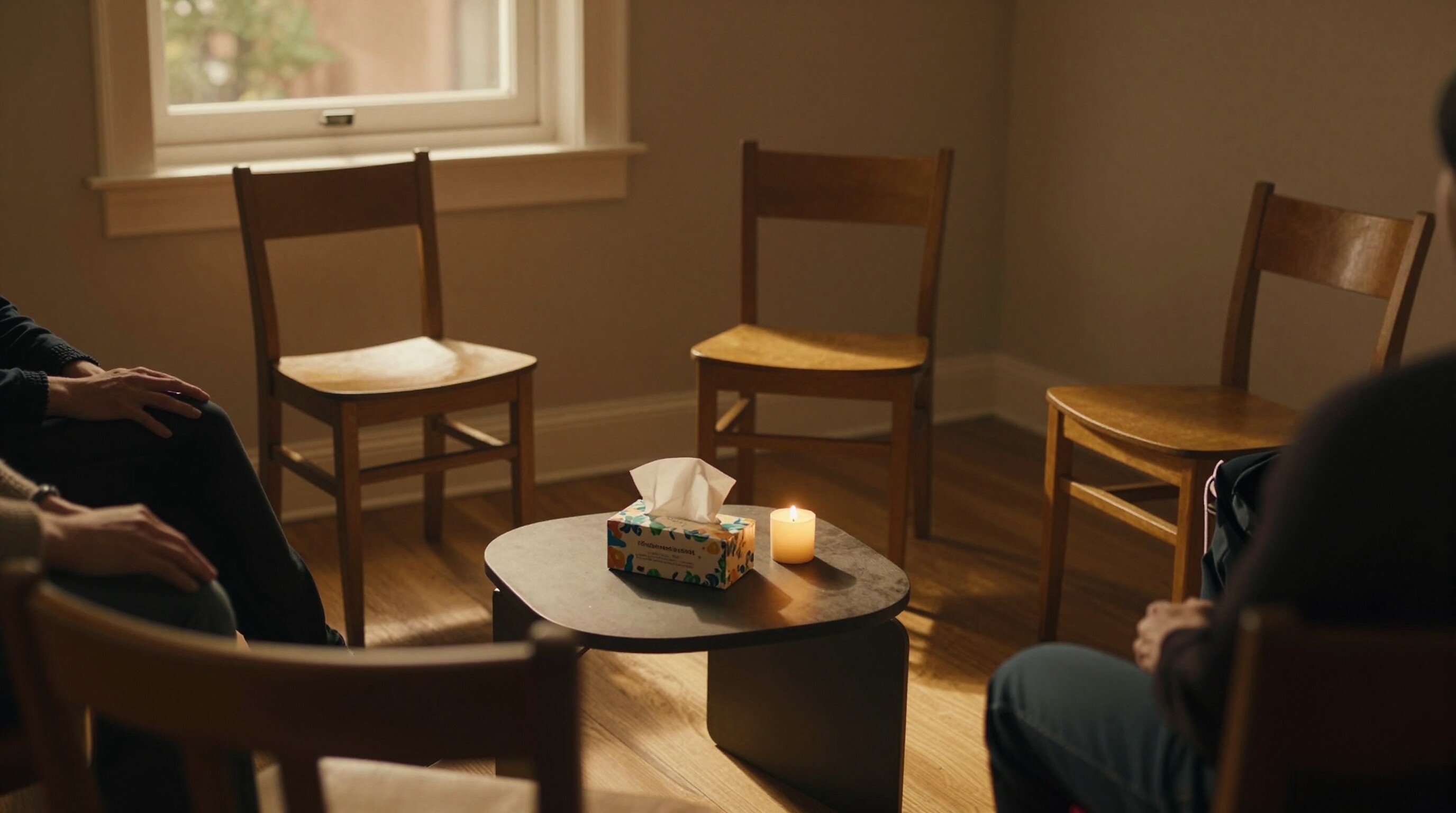
Grief Changes Everything
When someone you love dies, the world keeps moving, and you do not. People bring food for a week or two, then go back to their lives. You still reach for the phone to call them. You still set out two cups in the morning. Sundays feel different. Holidays feel impossible.
Grief can be one of the loneliest experiences there is. Even people of strong faith can feel far from God after a loss, and then feel guilty for feeling that way. Many people do not know where to put their sorrow.
A faith-based grief group can be that place. It brings together people who are grieving, gives them room to speak honestly, and holds onto hope when they cannot. Here is how these groups work and how they might help you.
What a Faith-Based Grief Group Is
A grief group is a small gathering of people who have lost someone, meeting regularly to talk, listen and learn. A faith-based group brings Christian faith into that space through prayer, Scripture and conversation about how grief and faith fit together.
Many churches host grief groups. Some use a structured program that runs for a set number of weeks with a video, workbook and discussion. Others are open groups that meet monthly and welcome people at any stage of grief. Hospices, hospitals and funeral homes also run grief groups, and some of them are faith-based.
Some groups are for anyone who is grieving. Others are for a specific loss, such as the death of a spouse, a child, a parent, a loss to suicide, or a pregnancy loss. If your loss is one of these, a specific group may feel especially understanding.
What Happens at a Meeting
Most groups have a gentle, predictable rhythm. A typical meeting might include:
- A welcome and an opening prayer.
- A short teaching or video on a part of grief, such as anger, loneliness, guilt, holidays or finding meaning.
- Time to share. People talk about their loved one, their week, or the topic. Others listen. No one is forced to speak.
- A closing prayer, sometimes with time afterward for coffee and quiet conversation.
Many groups invite you to bring a photo or tell a story about the person you lost. Saying their name out loud, among people who want to hear it, can be a deep comfort.
Most groups ask members to keep what is shared private, to avoid giving advice unless asked, and to let each person grieve in their own way and time.
How Grief Groups Help
People who join grief groups often describe a few common benefits:
- You are not alone. Hearing others describe the same fog, the same waves of sadness, or the same strange moments of laughter tells you that you are not losing your mind.
- Permission to grieve. Friends may hope you will "move on." A group understands that grief has no deadline.
- Practical wisdom. People share what helped them get through the first holidays, sort belongings or handle hard questions from children.
- Honest faith. Many people find relief in a place where they can ask "Why?" and admit anger or doubt, and still be met with grace. Scripture is full of lament, from the Psalms to Jesus weeping at the tomb of his friend Lazarus.
- Hope. Meeting people further along in grief shows you that life can hold joy again, even though it will never be the same.
Research on grief support groups shows mixed results, partly because groups vary so much. Many participants report that they feel less alone and better supported, and for most people that kind of support is a real help alongside time, family and faith.
What Grief Usually Looks Like
Grief affects your whole self. It is normal to feel deep sadness, numbness, anger, guilt or relief. It is common to have trouble sleeping, eating or concentrating, to feel tired, and to have waves of grief triggered by a song, a smell or a date on the calendar.
Many people know the idea of "stages" of grief. Today, most grief experts say grief does not follow neat steps. It tends to come in waves that slowly become less frequent and less intense over time. Learning to carry the loss, rather than "getting over" it, is often a better way to think about it.
When Grief Needs More Help
For most people, grief slowly softens with time and support. For some, it stays intense and gets in the way of daily life for a long time. Mental health professionals call this prolonged grief disorder. According to the American Psychiatric Association, it can be considered when, at least a year after a loss for adults, a person still has intense longing or preoccupation with the person who died, along with other symptoms such as deep emotional pain, feeling that part of themselves has died, or great difficulty re-engaging with life, nearly every day.
Reach out to a doctor or licensed counselor if you or someone you love:
- Cannot function at work or home for many months.
- Feels hopeless, or that life has no meaning without the person.
- Is using alcohol or drugs to cope.
- Has symptoms of depression, such as losing interest in everything, sleeping too much or too little, or feeling worthless.
- Has thoughts of wanting to die or of harming themselves.
Grief counselors, including Christian counselors, are trained to help with hard and complicated losses. Seeing one is not a lack of faith. Many people use a grief group and counseling at the same time.
Finding the Right Group
To find a group that fits:
- Ask your church. Many churches host grief groups or know of one nearby.
- Ask your hospice or funeral home. Many offer grief support for months after a death, often at no cost.
- Look for a group that matches your loss if one exists, such as loss of a spouse or a child.
- Check the format. A set course starts and ends on fixed dates. An open group lets you come and go.
- Try more than once. The first meeting is often the hardest. Give it two or three visits.
Supporting Someone Who Is Grieving
Maybe you are not the one grieving. Maybe it is your friend, your parent, your coworker or someone in your small group. It is hard to know what to say, so many people say nothing, and the grieving person feels even more alone. A few simple practices can make a real difference:
- Say the name. Many grieving people long to hear their loved one's name. "I've been thinking about your mom" is a gift.
- Keep showing up. Calls and cards often stop after a few weeks. A text a month later, or on a birthday or anniversary, means a great deal.
- Offer specific help. Bring a meal, mow the lawn, sit with them at church, or drive them to the cemetery.
- Avoid fixing. Phrases like "They're in a better place" or "At least they're not suffering" may be true for you, but can feel dismissive. "I'm so sorry" and "I'm here" are often enough.
- Pray with them, and for them. Ask first whether they would like you to pray with them right then.
- Offer to go with them to their first grief group meeting.
- Watch for warning signs. If they talk about wanting to die or seem unable to cope, gently encourage them to see a doctor or counselor, and do not leave them alone if you are worried about their safety.
Grief and the Holidays
Holidays, birthdays and anniversaries are often the hardest days of the year after a loss. Many grief groups hold special meetings in November and December, and some churches offer a quiet service for people who find the season painful.
A few ideas for hard days:
- Make a plan in advance. Decide where you will be and who you will be with, so the day does not catch you off guard.
- Give yourself permission to change traditions. You can skip the big gathering this year, or keep only the parts that bring comfort.
- Honor your loved one. Light a candle, share stories at dinner, cook their favorite dish, or give to a cause they cared about.
- Plan an exit. It is okay to leave early if it gets to be too much.
- Lean on your group. Members often check in on each other during the holidays.
There is no right way to get through these days. Be gentle with yourself and with others who are grieving alongside you.
What You Can Do Today
If you are grieving, here are some gentle steps for this week:
- Be kind to yourself. Grief is exhausting. Rest when you can, and lower your expectations for a while.
- Tell someone how you are really doing. A friend, pastor or family member who can just listen.
- Look up one grief group near you. Write down the day and time.
- Plan for hard days. Birthdays, anniversaries and holidays are easier with a plan and people around you.
- Keep a small ritual. Light a candle, visit a favorite place, or write a letter to your loved one.
- Talk to your doctor if sleep, appetite or mood are not improving over time.
You do not have to carry this alone. A grief group will not take your pain away, but it can help you carry it, among people who understand, with hope that sorrow does not have the last word.
You can browse faith recovery and support groups on Whole Wellbeing Atlas, find churches near you, or search the directory by your city or zip code.
If you or someone you know is in crisis or thinking about suicide, call or text 988 in the U.S. to reach the 988 Suicide & Crisis Lifeline. It is free, confidential and available 24/7. In an emergency, call 911.
This article is for informational and educational purposes only and does not constitute medical advice, diagnosis, or treatment.
Find a Faith-Based Group Near You
Search faith recovery and support groups near you, including church-hosted groups for grief and loss.
Search Faith GroupsAre You a Practitioner?
List your practice on Whole Wellbeing Atlas and reach patients searching for whole-person care, across traditional, alternative, and progressive approaches.
List Your PracticeStay Connected
Get insights on holistic mental wellness delivered to your inbox.